Why Nicotine and Vaping Can Delay Your Plastic Surgery
Patients are sometimes surprised when I tell them that nicotine can be a reason to postpone elective plastic surgery.
They may say, “But I don’t smoke cigarettes—I only vape.”
From a surgical standpoint, that distinction may not solve the problem.
Nicotine itself can negatively affect circulation and wound healing. That matters tremendously in plastic surgery because healthy blood flow is essential to keeping skin and tissue alive while the body heals.
Why Does Nicotine Matter So Much?
Many plastic surgery procedures involve lifting, tightening, repositioning or removing tissue.
The remaining tissue must maintain an adequate blood supply while it heals.
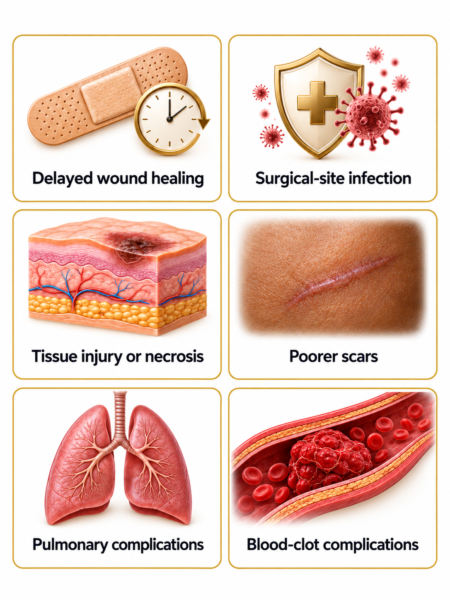
Nicotine can compromise that process and is associated with increased risks including
That is why this is a safety issue—not a lifestyle judgment. |
 |
Vaping Still Counts
A very common misconception is that vaping is acceptable because there is no traditional cigarette smoke.
If the product contains nicotine, your surgical team needs to know about it.
The same conversation applies to other nicotine-containing products, which may include patches, gum, pouches and some smoking alternatives.
Do not switch from cigarettes to another nicotine source and assume you have solved the surgical concern.
Why Is This Especially Important in Plastic Surgery?
Consider procedures such as a tummy tuck, breast lift or breast reduction.
During surgery, tissue is reshaped and repositioned. The skin and deeper tissues rely on healthy circulation during healing.
Anything that significantly compromises blood flow can threaten both healing and the cosmetic result.
This is one reason an experienced surgeon may postpone an operation rather than take a preventable risk.
Be Completely Honest With Your Surgical Team
Never hide nicotine use because you’re concerned your surgery might be delayed.
A temporary delay is far easier to deal with than a preventable wound complication.
Tell your team about:
- Cigarettes
- Vaping
- Hookah
- Cigars
- Nicotine gum
- Nicotine patches
- Other nicotine products
Your surgeon can then tell you how long you need to stop before and after your particular procedure.
The Bottom Line
One of the most important lessons I’ve learned from thousands of surgical transformations is that beautiful results depend on healthy healing.
There are certain risks your surgeon controls through technique, planning and safety protocols.
There are others that require partnership from the patient.
Nicotine avoidance is one of them.
If we ask you to stop nicotine, we’re not making surgery harder to qualify for. We’re trying to make surgery safer to recover from.