Is Your BMI Too High for Plastic Surgery? What Actually Matters
One of the most common questions I hear from patients is, “Is my BMI too high for plastic surgery?”
It’s an important question, but BMI does not tell the entire story.
Body Mass Index is simply a calculation based on your height and weight. It can help us screen for potential surgical risk, but it does not directly measure body fat, tell us where your fat is located, or replace a proper medical evaluation.
Why Does BMI Matter Before Plastic Surgery?
Plastic surgery is elective, which means we have an opportunity to identify and reduce avoidable risks before surgery.
A higher BMI may occur alongside other factors that can influence surgery and recovery, including high blood pressure, diabetes, sleep apnea, limited mobility and increased risk for certain postoperative complications.
That is why responsible plastic surgeons consider BMI as part of the overall safety assessment.
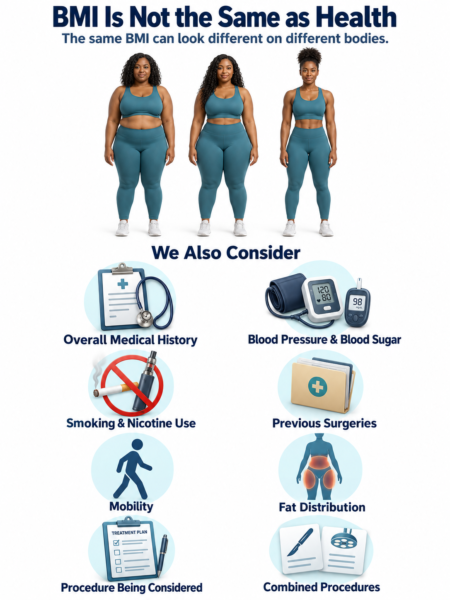
But BMI Is Not the Same as HealthTwo patients can have exactly the same BMI and have very different bodies. One may carry most of their weight around the abdomen. Another may carry more weight through the hips and thighs. Another may have significantly more muscle mass. We also consider:
This is why a BMI calculator should never be used by itself to decide whether someone is safe for surgery. |
 |
What Is Dr. Curves’ BMI Guideline?
At our practice, our usual target for surgical consideration is a BMI of 31.9 or below.
That guideline exists for safety.
However, if someone is only slightly above that range, there may be circumstances where Dr. Curves wants to evaluate the patient more closely before making a final determination.
Where the weight is located, the patient’s medical health, body composition and the planned operation can all matter.
Being slightly above 31.9 does not guarantee approval for surgery. It simply means that an individualized conversation may sometimes be appropriate.
What If My BMI Needs to Come Down?
Do not crash diet just to reach a number.
If surgery is your goal, we want you entering the operating room not only lighter, but also adequately nourished, hydrated and medically prepared to heal.
A sustainable plan may include:
- Higher-protein, nutrient-dense meals
- Reasonable portion control
- Reducing liquid calories and highly processed foods
- Regular walking and cardiovascular activity
- Strength training when appropriate
- Improving sleep
- Medical weight-management treatment for appropriate patients
For some patients, medications such as semaglutide may be an option after medical evaluation. Medication should support healthy habits rather than replace them.
Read our Weight Loss Guide for a deeper look at lowering BMI through nutrition, lifestyle and medically supervised options.
The Number Starts the Conversation
After more than two decades evaluating plastic surgery patients, I can tell you that numbers are useful—but patients are not numbers.
We evaluate the whole person.
If you’re unsure whether your current BMI makes you a candidate, the safest approach is to have your individual situation evaluated instead of trying to make that decision from an online calculator.
Your goal should not simply be reaching a number. Your goal should be becoming the safest, strongest surgical candidate possible.
Link text