Select Page
How Long Do You Need to Sleep on Your Back After Plastic Surgery?

How Long Do You Need to Sleep on Your Back After Plastic Surgery?

How Long Do You Need to Sleep on Your Back After Plastic Surgery?

One of the most common recovery mistakes is assuming that once you feel better, you can sleep however you want.

That is not always true.

For many plastic surgery patients, sleeping position matters longer than expected. The reason is simple: pressure, twisting, and tension can affect swelling, comfort, incision healing, and in some procedures, even the shape of the result.

This is where patients often get frustrated. They are sore, tired, and not sleeping well. After a few nights, they start wondering whether the sleeping restrictions are really necessary or whether they can go back to side sleeping sooner.

In most cases, the answer depends on the procedure, how much tension is on the tissues, and what your surgeon specifically wants to protect during early healing.

Why sleeping position matters after plastic surgery

Plastic surgery recovery is not just about rest. It is also about protecting healing tissues.

When you sleep in the wrong position too soon, several things can happen. You may place pressure on incisions, increase swelling in certain areas, feel more pain the next morning, or create stress on tissues that are still settling. In some procedures, that pressure can work against the recovery plan your surgeon gave you.

Patients sometimes think sleeping position is just a comfort issue. It is not. Early on, it is part of protecting the surgical result.

The short answer

For many procedures, back sleeping is recommended during the early part of recovery. For some patients, that may be around a couple of weeks. For others, especially after body contouring or breast procedures, it may be longer.

What matters most is not guessing based on how you feel. What matters is the procedure you had, the areas treated, and your surgeon’s instructions.

Why patients want to switch positions too early

Most people are not naturally comfortable sleeping on their back for days or weeks.

After surgery, patients often become restless. They may feel stiff, wake up often, or assume that because bruising is getting better, they are safe to roll onto their side. That is where good judgment matters. Recovery discomfort improving does not always mean the tissues are ready for unrestricted pressure.

This is one of the most common misunderstandings in plastic surgery recovery: feeling better and being fully ready are not the same thing.

Procedure-specific guidance

After breast augmentation or breast lift

Back sleeping is commonly recommended early in recovery to avoid pressure on the breasts and unnecessary tension on healing tissues.

Patients sometimes want to turn onto their side because their back feels sore. But side sleeping too early can increase discomfort, add pressure, and make healing less comfortable. It can also be unsettling for patients who are already worried about position, tightness, or asymmetry during the early phase.

After tummy tuck

Sleeping flat usually is not comfortable early on after a tummy tuck. Many patients are advised to sleep on their back with the upper body elevated and the hips or knees slightly bent to reduce tension on the abdomen.

This matters because the abdominal tissues are healing under tension. Trying to straighten too quickly or sleeping in a position that stretches the area can make recovery more uncomfortable.

After liposuction

Back sleeping is often still part of the recovery plan, but the details depend on where liposuction was done. If the treated area is exposed to pressure while you sleep, that can add soreness and swelling. Patients recovering from liposuction often do better when they think in terms of protecting treated areas, not just choosing the most comfortable position.

After BBL

This is one of the procedures where sleeping position gets the most attention. Patients are often told to avoid direct pressure on the buttocks during early healing. That means positioning becomes especially important at night.

Because recommendations vary based on technique and surgeon protocol, patients should follow their own post-op instructions closely rather than relying on general internet advice.

A common patient mistake

A lot of patients treat sleep instructions like suggestions instead of recovery rules.

They think, “It was only for one night,” or “I only rolled onto my side for part of the night.” But recovery is usually about consistency, not perfection once in a while. Repeated pressure or repeated twisting can matter more than patients realize.

That does not mean you need to panic if you shift in your sleep once. It does mean that your setup should be designed to make the correct position easier to maintain.

How to make back sleeping easier

This is where preparation helps.

Many patients do better when they create a more supported sleep setup instead of trying to force themselves to stay flat with no support. Depending on the procedure, that may mean extra pillows, a wedge pillow, support under the knees, or a reclined position that reduces tension and makes staying in place easier.

The goal is not perfect sleep. The goal is safer, more manageable recovery sleep.

When you can stop sleeping on your back

This is the question patients really want answered, but there is no single timeline that fits every surgery.

The better way to think about it is this: when your surgeon is comfortable that pressure, twisting, or stretch will not interfere with healing, you may be cleared to return to more normal sleep positions.

That timeline may be shorter for some procedures and longer for others. If multiple procedures were combined, restrictions may last longer. If swelling, tenderness, or tension are still significant, that usually matters too.

What not to do

Do not use pain alone as your guide.

Some patients assume that if side sleeping does not hurt much, it must be fine. Others assume that because they are sleeping poorly, the instructions are optional. Neither is a good recovery strategy.

Comfort matters, but protection matters more in the early phase.

What to ask instead

If you are unsure, ask more specific questions:

Which sleeping positions are safe for my procedure? What area are we trying to protect? What signs mean I am not ready to change positions yet? If I combine procedures, which restriction matters most?

Those questions are more useful than asking the internet what is “normal.”

Bottom line

For many plastic surgery patients, sleeping on the back is not just about comfort. It is part of protecting swelling, incisions, tissue tension, and early healing.

The timeline depends on the procedure and your surgeon’s plan. Feeling better does not automatically mean you are ready to sleep any way you want. In the early phase, protecting the result is usually more important than chasing perfect comfort.

If you are ever unsure, your own surgeon’s instructions should outweigh general advice.

FAQ

  1. How long do you need to sleep on your back after plastic surgery?
    It depends on the procedure and your surgeon’s instructions. Many patients need to back sleep during the early phase of recovery to protect healing tissues.
  2. Can I sleep on my side after breast surgery?
    Not always right away. Side sleeping too early can place pressure on healing tissues and make recovery less comfortable.
  3. Why is back sleeping important after a tummy tuck?
    It helps reduce tension on the abdomen, especially early on when the tissues are healing and tightness is common.
  4. What if I accidentally roll over in my sleep?
    One accidental shift is not usually a reason to panic, but your sleep setup should help you maintain the recommended position as consistently as possible.
  5. Should I follow internet advice or my surgeon’s advice?
    Your surgeon’s advice. Procedure details and recovery protocols vary, so your own instructions matter most.


How to Know If You’re Actually a Good Candidate for Plastic Surgery

How to Know If You’re Actually a Good Candidate for Plastic Surgery

How to Know If You’re Actually a Good Candidate for Plastic Surgery

Most people think if they want a procedure, they’re a candidate for it. That’s not how this works.

In my experience, the best results come from patients who are actually a good fit for the procedure—physically, mentally, and realistically.

It’s Not Just About Wanting It

Candidacy comes down to safety, whether the procedure makes sense for your body, and whether it can realistically achieve your goals.

Physical Candidacy Matters

Not every procedure works for every body. Requirements like tissue availability, skin quality, and overall health play a major role.

Your Expectations Have to Be Realistic

Expectations based on edited images or different body types often lead to disappointment, even when surgery is done well.

Timing Can Affect Your Results

Weight changes, pregnancy, or unstable health can impact your outcome. Timing matters more than most people think.

Final Thoughts

The goal is not just to have surgery. It’s to have the right surgery, at the right time, for the right reasons.

Frequently Asked Questions

  1. How do I know if I qualify for plastic surgery?

    A consultation is needed to evaluate your health, anatomy, and goals.

  2. Can I still have surgery if I’m not at my goal weight?

    Stable weight usually leads to better and more predictable results.

  3. What if I don’t qualify right now?

    It often means not yet, not never.

  4. Can I choose any result I want?

    No. Results must align with your anatomy and what is safely achievable.

  5. What matters more—wanting it or being a good candidate?

    Being a good candidate always comes first.

When a Tummy Tuck Becomes the Best Solution for Diastasis Recti

When a Tummy Tuck Becomes the Best Solution for Diastasis Recti


Understanding When Surgery Truly Makes a Difference

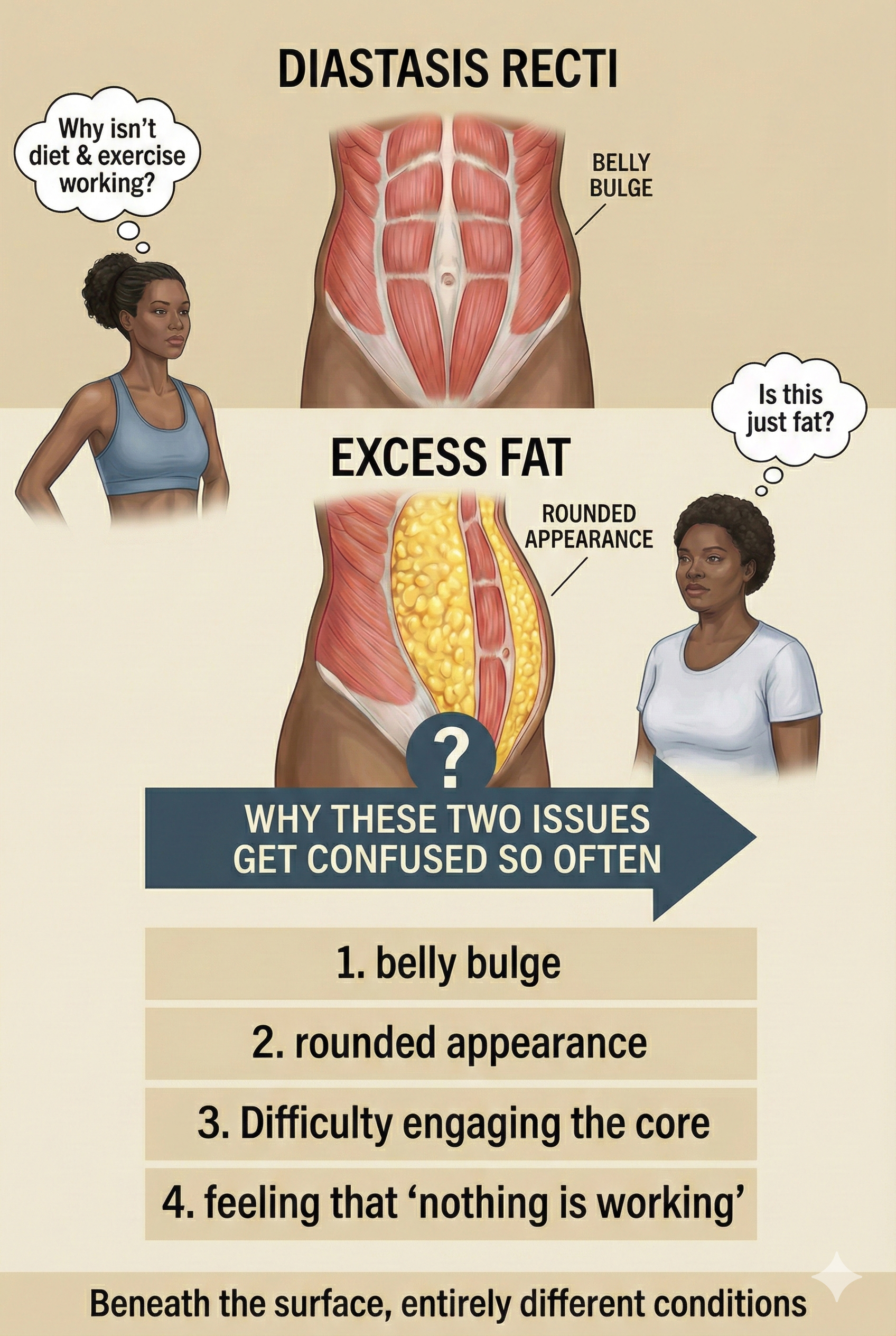
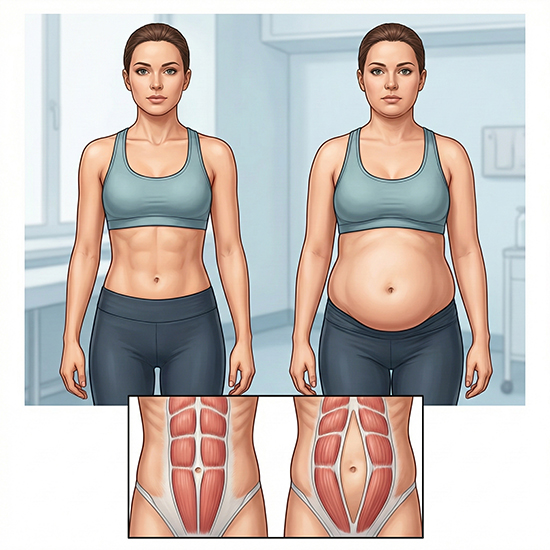
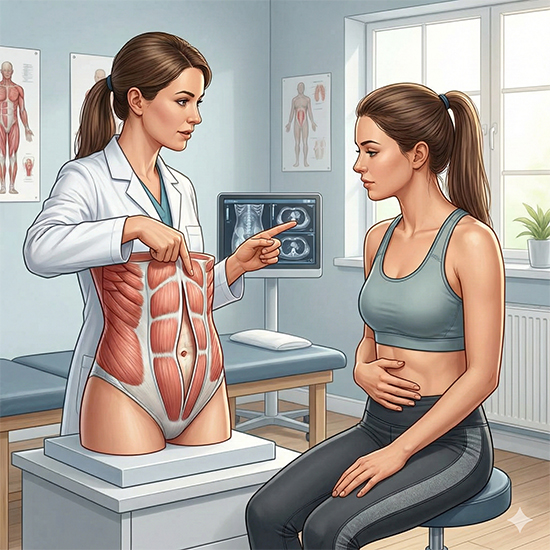
Many women spend months — sometimes years — trying to strengthen their core after pregnancy. They do everything “right”: targeted exercises, physical therapy, breathing techniques, Pilates, nutrition. Yet their stomach still protrudes, their core still feels weak, and their midsection never quite returns to its pre-pregnancy shape.

At a certain point, many ask me the same question:
“How do I know if it’s time to consider a tummy tuck?”

The answer depends on the degree of your muscle separation, how it affects your daily life, and whether conservative treatments have reached their limit.

Here’s a clear, honest explanation of when a tummy tuck becomes the best, most effective solution for diastasis recti — and why it can be truly transformative.


What a Tummy Tuck Actually Fixes (Beyond What Exercise Can Do)

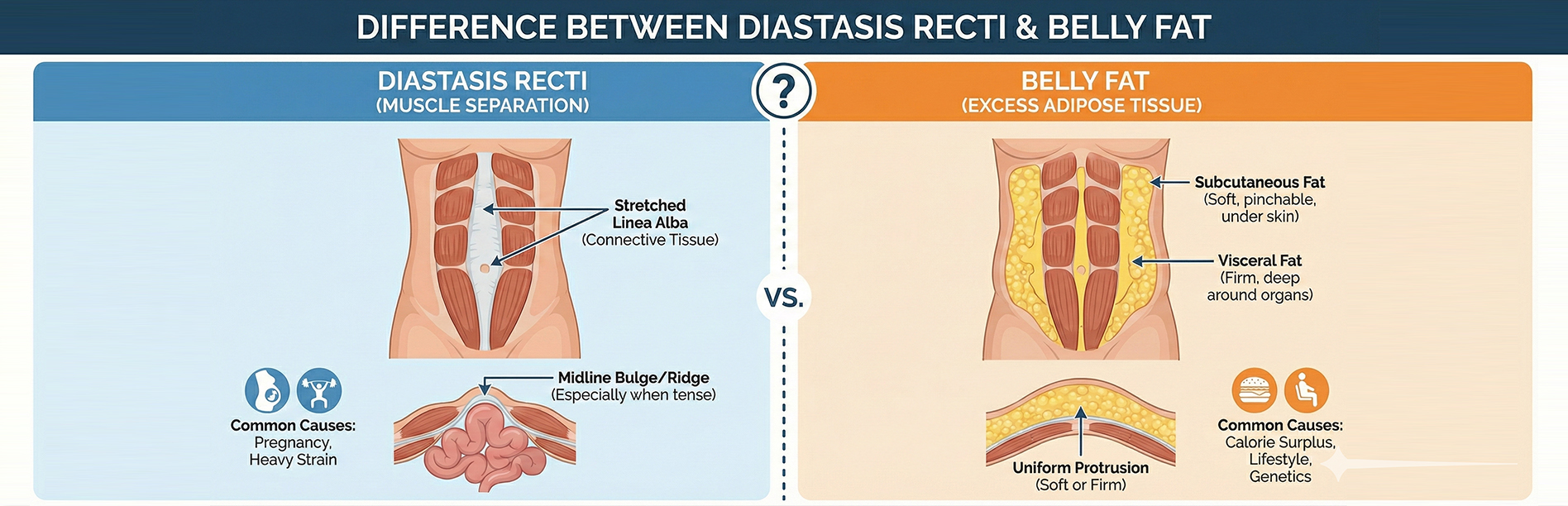
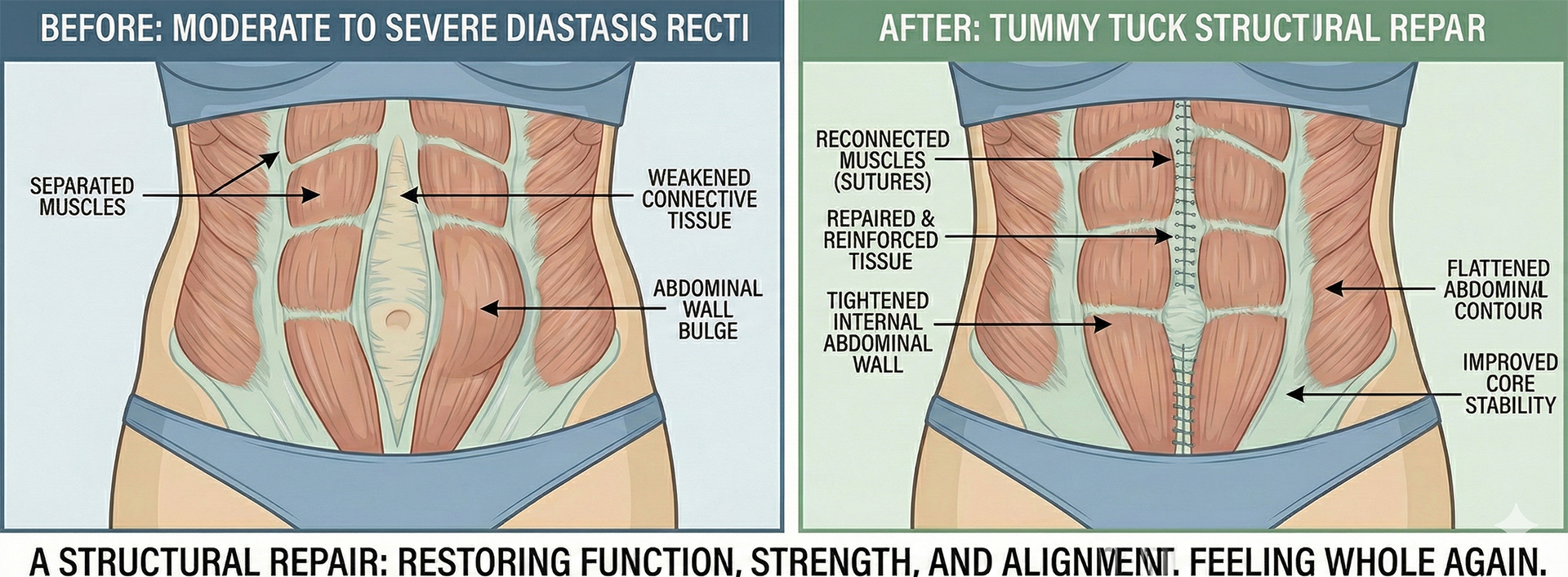
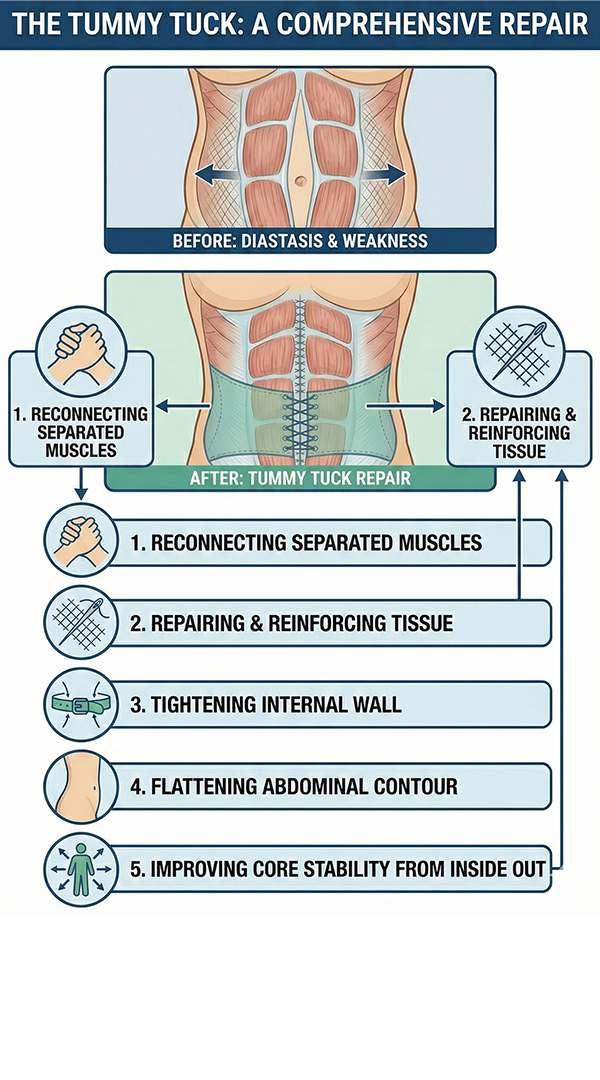
When diastasis recti is moderate to severe, the abdominal muscles have physically separated to a point where the connective tissue between them can no longer pull tight on its own.

A tummy tuck directly addresses this by:

  • Reconnecting the separated muscles
  • Repairing and reinforcing the overstretched tissue
  • Tightening the internal abdominal wall
  • Flattening the abdominal contour
  • Improving core stability from the inside out

This is not simply a cosmetic procedure. It is a structural repair — one that restores function, strength, and alignment. Many women tell me after surgery, “I didn’t realize how disconnected my body felt until I finally felt whole again.”


Signs That a Tummy Tuck May Be the Best Path Forward

If you recognize any of the following, surgery may be the most effective solution:

Your stomach still looks rounded even at a healthy weight

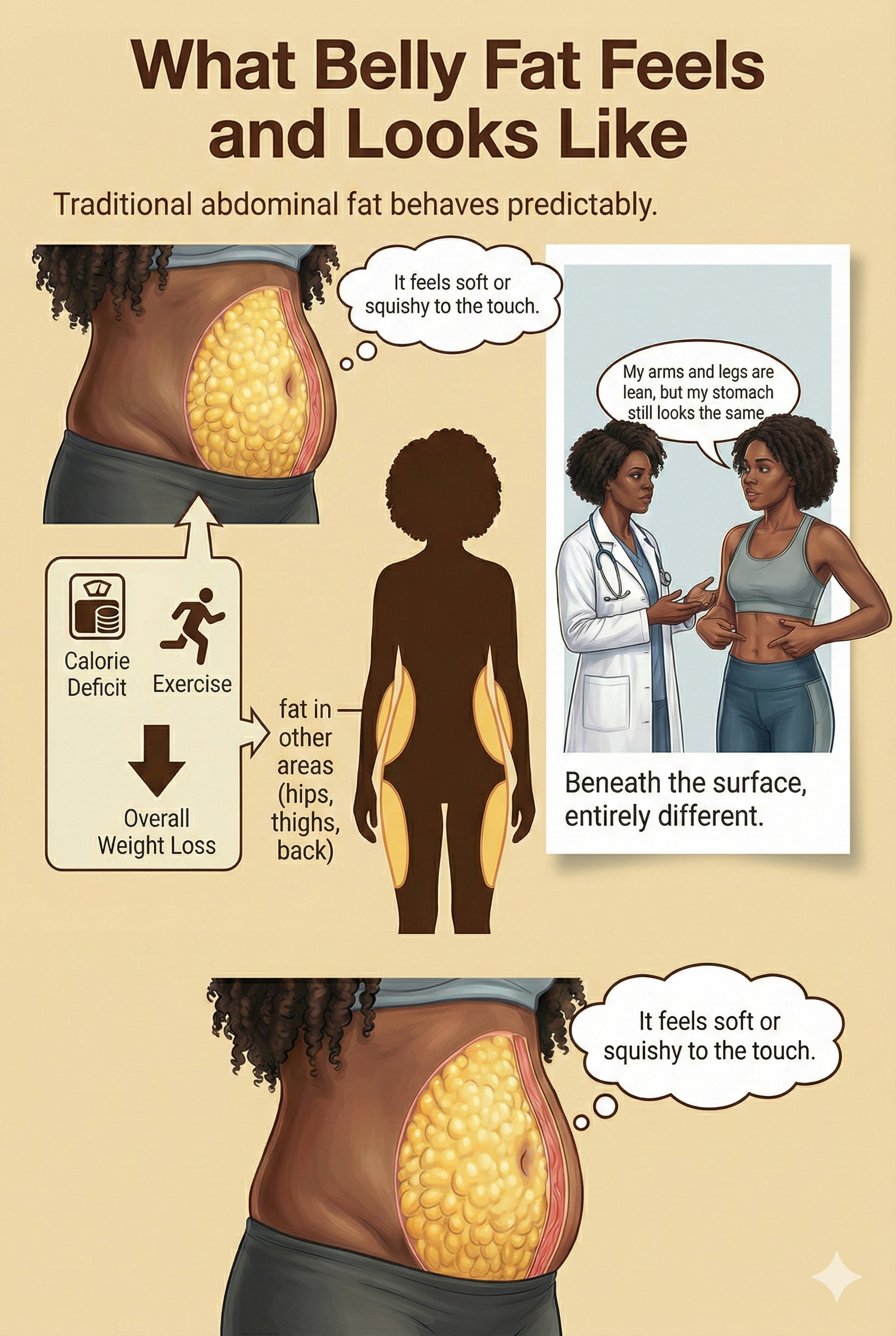
If the belly remains protruded despite fat loss, this is a classic sign of diastasis rather than fat.

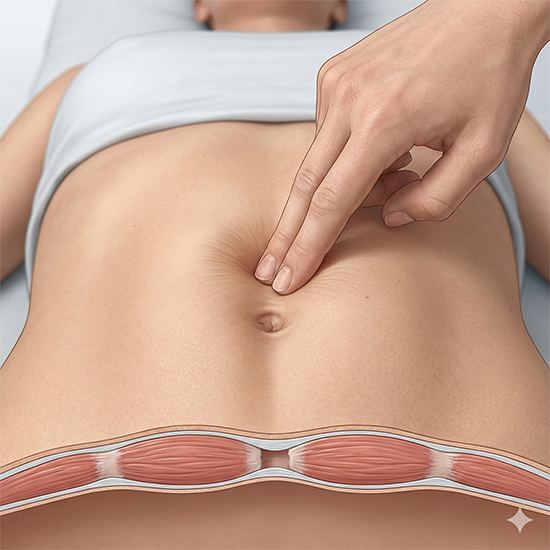
You can feel a gap down the center of your abdomen

A noticeable separation — especially more than two finger-widths — often requires surgical repair.

Your core feels weak or unstable

Women describe feeling “unsupported,” struggling with posture, or noticing strain during daily activities.

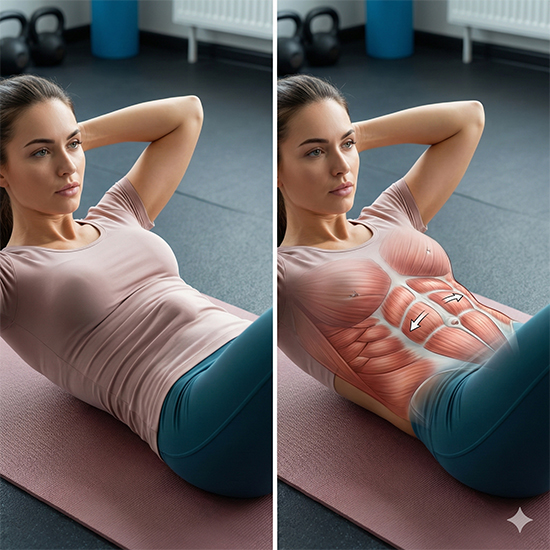
Exercise isn’t helping (or makes the bulge more noticeable)

If your stomach domes during sit-ups or planks, the separation is being stressed, not strengthened

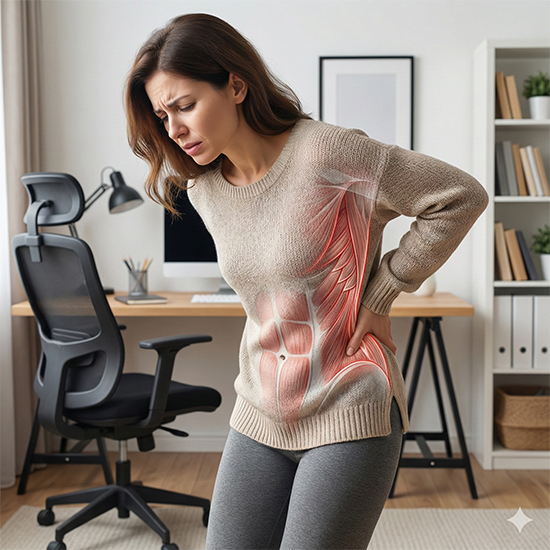
You experience back discomfort or poor posture

A weak core forces other muscle groups to compensate, creating chronic strain.

You’ve been told your diastasis is moderate or severe

Physical therapists and surgeons can often determine when the tissue has lost its elasticity and cannot self-correct.


Why Surgery Makes Such a Dramatic Difference

A tummy tuck with diastasis repair corrects the root issue, not just the appearance. When the muscles are restored to their proper alignment, women often experience:

  • A truly flat, supported abdomen
  • Better control and engagement of the core
  • Less strain on the back and pelvis
  • Improved posture
  • Smoother, more natural movement
  • Greater confidence in clothing
  • A renewed sense of physical connection

This is why so many women say the functional changes are just as meaningful as the aesthetic ones.


What You Can Expect From the Procedure

While each surgical plan is personalized, most repairs involve:

  1. Reuniting the rectus muscles at the midline
  2. Reinforcing the internal tissue for long-term support
  3. Removing excess skin if needed
  4. Refining the waist and abdominal contour

A tummy tuck allows the body to function the way it was meant to — strong, stable, and structurally aligned.

This isn’t simply about looking flatter.
It’s about restoring integrity to the core of your body.

When It’s Better to Wait

There are moments when I encourage women to postpone surgery:

If you plan to become pregnant again soon

If you’re still breastfeeding (hormones can affect tissues)

If your weight is still fluctuating

If your health or lifestyle requires optimization first


A Final Word From a Surgeon

If you’ve spent months feeling frustrated by a stomach that doesn’t respond to diet or exercise, it may be time to take a deeper look at what your body is telling you.

A tummy tuck isn’t a shortcut.
It’s a structural correction for a condition that cannot resolve on its own once it reaches a certain point.

You deserve clarity. You deserve comfort.
And if the right time comes, you deserve a core that supports you — inside and out.


So, What’s the Next Step?

It all starts with a consultation.
Whether you’re thinking about implants, fat transfer, a lift—or just have questions—we’re here to guide you through it all. You don’t need to have it all figured out yet. We’ll help you decide what works for your body and your goals.

Call us at (678) 205-8400

Click below to book your consultation

Book Appointment

The Truth About Semaglutide & Surgery

The Truth About Semaglutide & Surgery


How Medical Weight Loss Can Prepare You for Body Transformation

You’ve seen the viral results — but few talk about what Semaglutide really means for women preparing for life-changing body contouring surgery. At Dr. Curves, we use medical weight loss not just for shedding pounds — but for engineering the perfect surgical foundation.


What Is Semaglutide and Why It Matters Before Surgery

Semaglutide (Ozempic® / Wegovy®) is a GLP-1 medication that works by slowing digestion and curbing appetite allowing patients to safely lose up to 10–15% of their body weight

When guided by our medical team, this isn’t “dieting.” It’s preparation balancing your body’s hormones, reducing inflammation, and reaching an optimal BMI before your procedure


How It Supports Your Surgical Journey

Lower BMI = Safer Surgery

Less anesthesia risk, smoother contouring, and faster recovery

Better Healing

Stable blood sugar levels and adequate hydration improve tissue repair efficiency

Confidence Boost

Patients walk into surgery empowered — already seeing transformation.


Dr. Curves’ Semaglutide + IV Hydration Protocol

We combine GLP-1 therapy with IV hydration to protect electrolytes, preserve lean muscle, and speed up metabolism.
Your pre-surgery prep includes:

  1. Personalized dosing plan (physician-supervised)
  2. Weekly hydration infusions
  3. Pre-op labs and metabolic tracking
  4. Nutritional guidance for long-term success


Real Results, Real Readiness

Patients who once said, “I’m not ready for surgery yet,” often reach readiness in 90 days or less under this program — walking into their Mommy Makeover or BBL surgery confident, healthy, and emotionally prepared.


Take the Next Step Toward Feeling

Like Yourself Again

If you’re ready to restore fullness, lift sagging, and finally achieve the perky, natural look you’ve always wanted, the next step is a consultation. During this visit, we’ll review your goals, go over your medical history, answer your questions, and design a plan tailored to you.

Call us at (678) 205-8400

Click below to book your consultation

Book Appointment

Round vs. Teardrop Implants

Round vs. Teardrop Implants


Round vs. Teardrop Implants: How to Choose the Right Shape for Your Body

So, you’ve decided you want breast implants. Amazing. But now you’re staring down a new question—Which shape should I get?

Round or teardrop? Natural or fuller? What works best for your body, lifestyle, and the look you’re going for?

This decision is more personal than most people think—and it’s not about copying a celebrity or going with what’s “popular.” Let’s break it down together so you can make an informed decision that feels good and looks great


Your Body Type Comes First

Every body is different—and that’s the point. The best results happen when your implant shape matches your own body structure, not someone else’s photo from Instagram.

  • Round implants might give you more upper pole fullness (translation: that “push-up bra” look).
  • Teardrop implants offer a more natural slope and mimic the shape of real breast tissue.

But what looks stunning on one woman may not be the best choice for you. That’s why the conversation should always start with your anatomy, your goals, and your vision—not trends.


Understanding Round Implants

Round breast implants are the most commonly used, and for good reason. They deliver volume across the entire breast, especially the top, which creates a youthful, lifted appearance.

They also come in different projection levels—from low to high—so you can customize how much the breast projects outward.

Women wanting more upper breast fullness Those looking to correct mild sagging Budget-conscious patients (these are typically less expensive)

And the best part? If they rotate inside the body, it doesn’t change the shape—because they’re symmetrical all the way around.


Traveling for Surgery? Know This First

If you’re traveling more than an hour away, you’ll need to stay close to our office for at least 48 hours. If you’re flying in or driving over three hours, plan to stay within easy driving distance for 10 to 14 days.

Traveling increases risk for:

  • Blood clots (DVT), especially if you smoke or use birth control
  • Infection, due to air travel and general exposure

This is your health. These precautions are in place for a reason.


Drains and Scars

Some procedures may require post-op drains. Your nurse will give you all the details and how to care for them.
As for scars—yes, they happen. But we do everything we can to place incisions carefully and guide you through proper healing. Things like wound size, your skin type, age, and how you care for the area all play a role.
Once you’re healed, we’ll walk you through options for scar care.


Budget and Expectations

At your consultation, we’ll discuss:

Your goals Your Areas of Concern Your Budget Financing Options

Dr. Jimerson will recommend a treatment plan that gives you natural-looking, balanced results. If needed, we can split procedures into stages to work with your schedule and budget.

Quotes, Deposits, and Payment Timeline

After your consultation:

  • You’ll receive a quote valid for 30 days
  • Secure your quote for 1 year with $500
  • Balance is due 60 days before surgery
Your quote includes:

  • Surgeon’s fees
  • Anesthesia
  • Operating room expenses
  • Post-op garment (most procedures)
It does not include:

  • Medical clearance and labs
  • Post-op supplies or additional garments


Why BMI Matters

BMI (Body Mass Index) is a measure of body fat based on height and weight. The ideal range is 20 to 25. A BMI over 30 increases surgical risk.

If you’re overweight, we recommend losing excess weight before surgery. It leads to more predictable, longer-lasting results. On the flip side, if you’re too lean and want fat transfer procedures, you might be asked to gain a few pounds.


Your Weight Affects Your Results

If you lose weight after surgery, you may have loose skin. If you gain weight, you could stretch out your results.Consistency is key. Weight stability before and after surgery will protect your investment and help you get the best outcome possible.


Medication Guidelines

Be transparent about every medication and supplement you’re taking. Some medications can interact with anesthesia and increase surgical risk.

Here’s what to stop before surgery:

Smoking Alcohol Hormones or birth control NSAIDs and aspirin Vitamin E Weight loss supplements


Thinking About Combining Procedures?

There are pros and cons.

Pros:

  • One recovery period
  • One anesthesia session
  • Lower overall cost
  • See multiple results at once
Cons:

  • Longer time under anesthesia
  • More strain on the body
  • Increased risk if not in good health


We’ll evaluate your health, goals, and timeline—and we’ll only move forward with what’s safe and realistic for you.


Meet Your Surgical Team

All procedures are performed at our accredited surgical center in Johns Creek, Georgia.

Our 14,000-square-foot facility includes:

  • Three state-of-the-art operating rooms
  • A full team of board-certified medical professionals

Dr. Jimerson leads every procedure, supported by a team of CRNAs, nurses, surgical assistants, and more. You’re not just getting a skilled surgeon—you’re getting a coordinated, experienced team committed to your safety and success.


Informed Consent and Expectations

We want you to be fully informed. Everyone has some degree of natural asymmetry—and while cosmetic surgery can improve balance, it can’t make the human body perfectly symmetrical.

We’re committed to transparency, realistic expectations, and the best outcomes possible


Last Word: Your Best Results Start Long Before the Surgery

This is about setting you up for success—not just with the procedure itself, but with the planning, lifestyle, and choices leading up to it. Because surgery is only one part of your transformation. The rest? That’s where preparation, education, and trust come in. If you’re ready to take the next step, book a consultation with Dr. Curves. We’ll walk you through every detail, together.


So, What’s the Next Step?

It all starts with a consultation.

Whether you’re thinking about implants, fat transfer, a lift—or just have questions—we’re here to guide you through it all. You don’t need to have it all figured out yet. We’ll help you decide what works for your body and your goals.

Call us at (678) 205-8400

Click below to book your consultation

Book Appointment


Final Thought

There’s no “perfect breast” — only the one that makes you feel confident, feminine, and free to wear what you love without hesitation. Let’s help you get there. 💖