Select Page
How Soon Can You Go Back to Work After Plastic Surgery? (What Most People Get Wrong)

How Soon Can You Go Back to Work After Plastic Surgery? (What Most People Get Wrong)

How Soon Can You Go Back to Work After Plastic Surgery? (What Most People Get Wrong)

One of the first questions patients ask isn’t about results—it’s about time.

In my experience, most people aren’t afraid of surgery itself. They’re worried about disrupting their routine, their income, or having to explain their absence.

What surprises many patients is that recovery timelines are often misunderstood—not because they’re too long, but because they’re too simplified online.

Recovery Isn’t One Timeline

There is no single answer to when you can return to work.

It depends on the procedure, your job type, your healing response, and how well you follow recovery instructions.

What ā€œReturning to Workā€ Actually Means

There’s a difference between feeling better, being functional, and being fully healed.

Returning too early can affect recovery and results.

General Recovery Guidelines

Desk jobs: 5–10 days
Moderately active jobs: 2–3 weeks
Physically demanding jobs: 3–6+ weeks

The Biggest Mistake Patients Make

Rushing back too soon can increase swelling and delay healing.

Planning Your Time Off Properly

Take slightly more time off than you think you need and ease back into your routine.

The Psychological Pressure to Bounce Back

Recovery takes time—physically and mentally. Giving yourself space improves outcomes.

When You’re Actually Ready

You’re ready when you can move comfortably, manage pain, maintain recovery habits, and have surgeon clearance.

FAQ

  1. Can I work from home sooner? Yes, light remote work is often possible earlier.
  2. What if I feel fine quickly? You may not be fully healed—be cautious.
  3. Do I need to tell my workplace? That’s personal, but planning ahead is key.
  4. What if I go back too early? It can slow recovery and increase swelling.
  5. Is it better to take extra time off? Yes, it reduces stress and supports healing.

How Much Pain Is Normal After Plastic Surgery? What Patients Are Often Surprised By

How Much Pain Is Normal After Plastic Surgery? What Patients Are Often Surprised By

How Much Pain Is Normal After Plastic Surgery? What Patients Are Often Surprised By

Pain is one of the most common concerns patients have before surgery—and one of the most misunderstood.

In my experience, most patients don’t regret the procedure itself. What surprises them is how the discomfort actually feels, how long it lasts, and how different it is from what they expected.

The truth is, ā€œpainā€ after plastic surgery is rarely what people imagine.

What Does Post-Surgery Pain Really Feel Like?

Most patients expect sharp, intense pain.

In reality, it’s usually soreness, tightness, pressure, or fatigue in the treated area.

For example:

– Liposuction often feels like deep bruising or muscle soreness
– Breast surgery can feel like chest tightness or heaviness
– A BBL typically involves soreness in multiple areas

Severe, sharp pain is actually uncommon—and when it happens, it’s something we pay close attention to.

The First 72 Hours: What to Expect

This is when discomfort is most noticeable.

You may experience swelling, stiffness, limited mobility, and a tight or stretched feeling.

Most patients are surprised that the pain is manageable with proper medication and support.

In my experience, the first 2–3 days are more about adjustment than unbearable pain.

Why Some Patients Feel More Discomfort Than Others

Pain tolerance plays a role—but it’s not the only factor.

Other important factors include the type of procedure, how extensive it is, your body’s response, and how well you follow recovery instructions.

Patients who stay ahead of pain almost always have a smoother experience.

The Biggest Misconception About Pain

Many patients assume that if they’re in pain, something must be wrong.

That’s not true. Some discomfort is a normal part of healing.

What matters is how the pain behaves over time.

When Does It Start to Feel Better?

Most patients notice improvement within the first week, with significant progress by week two and near-normal activity by weeks three to four.

What Actually Makes Recovery Easier

Take medications on schedule, follow movement guidelines, stay hydrated, wear compression garments, and avoid overexertion.

Recovery is about managing pain intelligently—not pushing through it.

The Psychological Side of Pain

Fear amplifies discomfort. Clear expectations make recovery feel more manageable.

FAQ

  1. Is plastic surgery very painful? Most procedures involve moderate discomfort rather than severe pain.
  2. How long does pain usually last? The first 3–5 days are most noticeable, with improvement after.
  3. Will I need strong pain medication? Usually for the first few days, then less.
  4. What kind of pain is not normal? Sharp, worsening pain or pain with fever should be checked.
  5. Can I recover with minimal pain? Yes, with proper planning and care.

What Liposuction Can and Cannot Do

What Liposuction Can and Cannot Do

Liposuction is one of the most requested procedures in plastic surgery and also one of the most misunderstood. A lot of patients come in thinking it is a solution for weight loss. It is not.

And that misunderstanding is exactly where expectations start to go wrong. Understanding what liposuction is actually designed to do helps patients make better decisions and feel more confident about the results they can realistically expect.

What Liposuction Is Actually Designed to Do

Liposuction is a body contouring procedure. Its purpose is to remove localized fat deposits that do not respond to diet and exercise.

This typically includes areas such as:

  • Abdomen
  • Flanks (love handles)
  • Back
  • Thighs
  • Arms

The goal is not to change your weight dramatically. It is to improve shape and proportion.

What Liposuction Does Well

When used correctly, liposuction can make a significant difference. It works best for patients who are close to their ideal weight, have stubborn fat that does not respond to lifestyle changes, and have relatively good skin elasticity.

In these cases, liposuction can:

  • Create a more defined waistline
  • Improve overall body contour
  • Enhance proportions between different areas

In many cases, the best results happen when patients are already at a relatively stable weight and are looking for refinement rather than major transformation.

What Liposuction Does Not Do

This is the part that matters most, because most dissatisfaction comes from expecting liposuction to do something it is not designed to do.

It Does Not Remove Loose Skin

If skin has already lost elasticity, whether from weight loss, pregnancy, or aging, removing fat alone will not tighten it. In some cases, it can actually make loose skin more noticeable. This is where a procedure like a tummy tuck may be more appropriate.

It Does Not Tighten Muscles

If your concern is muscle separation, such as diastasis recti, liposuction will not fix that. In that situation, the issue is structural rather than fat-related.

It Is Not a Weight Loss Solution

Liposuction is not meant for significant weight reduction. Removing large amounts of fat is not the goal, and it is not how the procedure is designed to be used. Patients who approach liposuction as a substitute for weight loss often end up disappointed.

Why Expectations Matter More Than the Procedure Itself

Liposuction can work extremely well, but only when expectations are aligned with reality. Patients who understand that it is about shaping, not shrinking, tend to be much more satisfied with their results.

On the other hand, when patients expect dramatic weight loss or skin tightening, the results will not meet those expectations, even if the procedure is performed correctly.

What Determines a Good Result

Your Skin Quality

Good skin elasticity allows the skin to contract more smoothly after fat removal. If elasticity is limited, the final result may not look as tight.

Your Starting Point

Patients who are closer to their ideal weight typically see better contouring results.

The Areas Being Treated

Some areas respond more predictably than others. Proper planning and technique play a major role in the final outcome.

Your Post-Operative Habits

Maintaining your results depends on stable weight, a healthy lifestyle, and following recovery instructions carefully.

Can Liposuction Results Last Long-Term?

Yes, but with one important condition. The fat cells removed during liposuction are permanently gone. However, your body can still store fat in the remaining cells.

That means weight gain can still affect your shape, and new fat can accumulate in other areas. Patients who maintain a stable weight tend to keep their results long-term.

What Most Patients Don’t Think About

One of the biggest misconceptions is thinking liposuction will completely reshape the body regardless of the starting point. But the procedure works best as a refinement tool.

It enhances what is already there. It does not replace the need for overall weight management or address structural issues.

When Liposuction Is the Right Choice

Liposuction is usually the right option when:

  • The issue is localized fat
  • Skin elasticity is still relatively good
  • The goal is contouring, not major weight loss

When those conditions are met, the procedure can produce clean, natural-looking results.

Final Thoughts

Liposuction is a powerful tool, but only when used for the right purpose. It is not about removing as much fat as possible. It is about creating balance, proportion, and a result that fits your body naturally.

When expectations are clear, the outcome is not only better. It is also more predictable and long-lasting.

Ready to Take the Next Step?

If you’re considering liposuction and want to understand whether it is the right option for your body and goals, the first step is completing a quick surgical evaluation form. This allows our team to assess your situation and guide you toward the best approach.


Book Your Consultation

ā€œShe Needed Thisā€ — What People Get Wrong About Plastic Surgery Decisions

ā€œShe Needed Thisā€ — What People Get Wrong About Plastic Surgery Decisions

ā€œShe Needed Thisā€ — What People Get Wrong About Plastic Surgery Decisions

You’ve probably seen it before.

Someone posts a result, and the comments start. ā€œShe didn’t need that.ā€ ā€œShe should’ve done something else.ā€ ā€œShe went too far.ā€ ā€œShe should’ve just worked out.ā€

The issue is not that people have opinions. The issue is that those opinions are usually based on what is visible, not what is actually going on.

What People See vs. What Patients Feel

Most people judge results from photos or short videos. What they do not see is the full picture. They do not see years of discomfort, changes after pregnancy, long-term frustration, difficulty with clothing, or the mental and physical burden that led someone to consider surgery in the first place.

In my experience, this is where the biggest disconnect happens. People evaluate from the outside. Patients live it from the inside. Those are not the same perspective, and they rarely lead to the same conclusion.

ā€œShe Didn’t Need Thatā€ Is Usually an Incomplete Statement

When someone says, ā€œShe didn’t need that,ā€ what they usually mean is, ā€œI would not have chosen that.ā€ That is a completely different statement.

What patients may actually be dealing with is often much more complex. It may involve asymmetry, discomfort with movement, changes after weight loss, changes after childbirth, or a result that does not fit the rest of their body the way people assume it does from a single angle.

A comment section usually reacts to appearance. A proper surgical evaluation looks at anatomy, goals, limitations, health history, and what is realistically achievable.

The Problem With Assumptions

One of the biggest mistakes people make is assuming they understand the full situation with very little information. They do not know what the patient was told in consultation. They do not know what the patient was trying to correct. They do not know what the patient had already gone through before making that decision.

That matters, because surgery should never be judged accurately without context. A before-and-after photo can show a change. It cannot explain the full reason behind it.

Not Every Procedure Is About Doing More

Another common misunderstanding is that plastic surgery is always about making something bigger, more dramatic, or more attention-grabbing. In reality, many procedures are about correcting imbalance, restoring proportion, improving comfort, or addressing a concern that has affected someone for years.

Sometimes the goal is not ā€œmore.ā€ Sometimes the goal is balance. Sometimes it is relief. Sometimes it is getting back to a shape that feels more normal for that patient’s body.

What Patients Actually Care About

Most patients are not making decisions based on what strangers online might say. They are thinking about how they feel in their clothes, how their body moves, whether they feel proportionate, and whether a procedure may solve a problem that has been bothering them for a long time.

The goal is not to satisfy public opinion. The goal is to make a sound decision based on the patient’s body, concerns, and priorities.

Final Thoughts

Plastic surgery decisions are personal. They should be based on informed medical guidance, realistic goals, and the patient’s actual situation, not assumptions made from a photo or a comment.

What someone ā€œneededā€ cannot be determined by people who do not know the full story. That decision is made through proper evaluation, honest discussion, and a plan that makes sense for the individual patient.

If you are thinking about a procedure, the most useful opinion is not the loudest one. It is the informed one.

Frequently Asked Questions

  1. How do I know if I actually need a procedure?

    A proper consultation is the only way to determine that based on your anatomy, concerns, and goals.

  2. Are online opinions reliable when it comes to surgery?

    No. They are usually based on limited information and do not reflect a real medical evaluation.

  3. Is plastic surgery always about appearance only?

    No. Some procedures are also about comfort, proportion, symmetry, or correcting a problem that affects daily life.

  4. Why do people judge plastic surgery results so quickly?

    Because they are reacting to visuals without understanding the full context behind the decision.

  5. Should I base my decision on what others think?

    No. Your decision should be based on your own concerns, goals, and qualified medical guidance.

Breast Reduction Scars — What They Really Look Like Over Time

Breast Reduction Scars — What They Really Look Like Over Time

Breast Reduction Scars — What They Really Look Like Over Time

One of the biggest concerns patients have before a breast reduction is not the procedure itself. It’s the scars.

That concern is completely understandable. For many patients, the question is not whether breast reduction can help. It is whether the trade-off feels worth it.

You are replacing one problem with another, at least in theory. You may be relieving years of heaviness, neck pain, back pain, shoulder grooving, posture strain, or difficulty with exercise, but now you are thinking about visible scars on the breasts.

What matters is understanding what those scars really look like, how they typically change over time, and what patients can realistically expect long-term.

In my experience, patients who understand breast reduction scarring ahead of time usually feel far more confident in their decision and far less anxious during healing. The concern is valid, but it should be understood in context.

Why Breast Reduction Scars Are Necessary

Breast reduction is not just about removing volume. It is also about reshaping the breast, improving proportion, reducing excess skin, and repositioning the nipple to a more natural and balanced location.

That cannot be done well without incisions.

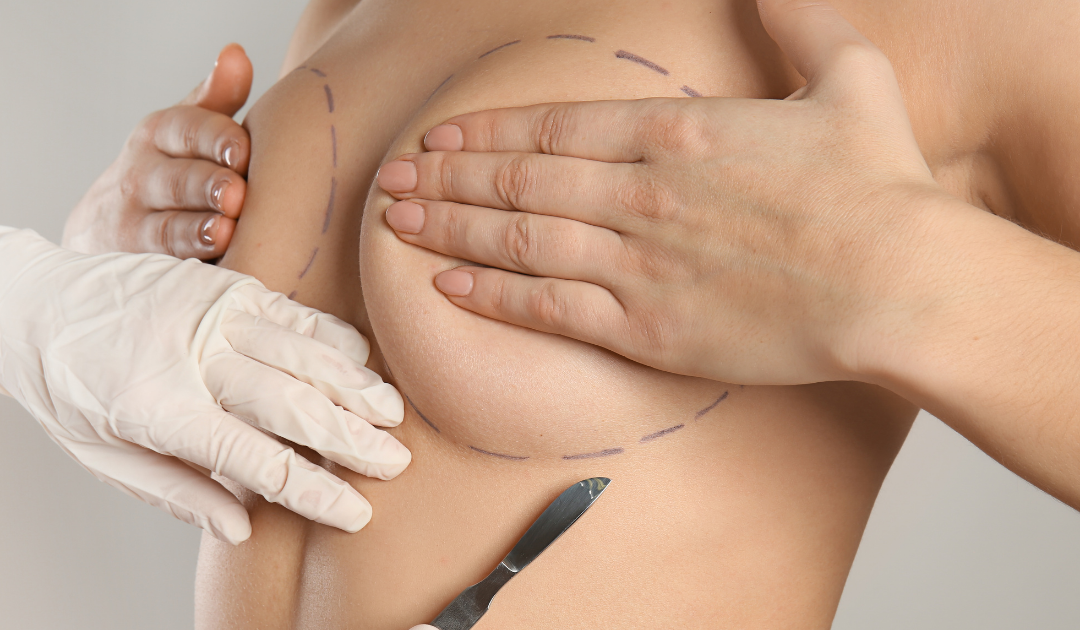
In most breast reduction procedures, the scar pattern includes an incision around the areola, a vertical incision from the areola down to the crease, and sometimes an incision hidden within the breast fold. Depending on the amount of reduction and the amount of lift required, this is often described as either a lollipop pattern or an anchor pattern.

These are not arbitrary incisions. They are part of what allows the breast to be reshaped in a controlled, durable, and aesthetically balanced way.

What patients often misunderstand is that the goal is not to avoid incisions at all costs. The goal is to create the best overall result with safe, sound technique and realistic long-term balance.

What Breast Reduction Scars Look Like Early On

Early scars do not represent final scars. That is one of the most important things to understand.

In the early healing phase, breast reduction scars are usually more noticeable. They may look pink, red, or darker than the surrounding skin. They may feel slightly raised, firm, or uneven in the beginning. The skin itself may still be adjusting, and the breasts may still be swollen.

This is normal.

Scars are often at their most visible in the earlier stages of healing, especially in the first several weeks to months. That can be alarming for patients who expected the incision lines to immediately look soft or faint. That is not how scar maturation works.

In my experience, one of the biggest mistakes patients make is judging their scars too early. The early appearance is not the final appearance.

How Breast Reduction Scars Change Over Time

Scars evolve in phases. They do not stay the same, and they usually improve significantly with time.

First 6 to 8 Weeks

During this period, the incisions are still relatively fresh. The scars may be more visible, firmer, darker, or pinker than they will be later. Swelling may still be present, and the breasts are still settling.

3 to 6 Months

This is often the stage where scars begin to soften and flatten more noticeably. Color changes may still be present, but many patients begin to see meaningful improvement in how the scar lines look and feel.

6 to 12 Months

Scars usually continue maturing throughout this period. They often become lighter, less raised, and less noticeable overall. The final shape of the breasts also becomes more settled, which changes how the scars are perceived.

Beyond 1 Year

By this stage, scars are generally much closer to their long-term appearance. They are still permanent, but in many patients they are far less noticeable than they were early on.

In my experience, patients are often surprised by how much improvement happens when they allow enough time for full scar maturation.

What Affects How Your Scars Heal

Not all scars heal the same way. Several factors can influence how breast reduction scars look over time.

Skin Type and Genetics

Some patients naturally form more visible scars than others. Genetics, skin tone, and individual healing tendencies all play a role.

Surgical Technique

Incision placement, tissue handling, and closure technique matter. Careful technique helps support better healing and more refined scar quality over time.

Tension on the Incision

When healing tissue is under more tension, scars may widen more easily. This is one reason surgical planning and proper support during recovery matter.

Post-Operative Care

Following recovery instructions matters. Wearing recommended support garments, avoiding unnecessary strain, and protecting healing tissues all support the recovery process.

Sun Exposure

Scars that are exposed to sun too early can darken and become more noticeable. Scar protection is an important part of healing.

What patients often misunderstand is that no cream, product, or shortcut can completely override biology. Good healing is usually the result of proper surgery, proper aftercare, and time.

What Patients Often Get Wrong About Breast Reduction Scars

There are a few misconceptions that come up repeatedly when patients are deciding whether breast reduction is worth it.

ā€œThe scars will stay dark and obvious forever.ā€

Usually not. Scars are permanent, but in most patients they fade significantly over time and become much less noticeable than they were in the beginning.

ā€œIf there are scars, the surgery was not done well.ā€

That is not accurate. A well-done breast reduction still involves scars. The issue is not whether scars exist. It is how the breasts are shaped, how the incisions heal, and how balanced the final result looks overall.

ā€œScar creams determine everything.ā€

Scar care can be helpful, but it is only one part of the picture. Healing still depends on the patient’s biology, surgical technique, and time.

ā€œI will know what my scars look like within a few weeks.ā€

Too early. Scar maturation is a long process. Early scars can look very different from mature scars months later.

Are Breast Reduction Scars Worth It?

This is ultimately a personal decision, but for many patients the answer is yes.

In my experience, once healing progresses, most patients focus far more on how much better they feel than on the existence of the scars themselves. Relief from heaviness, better posture, improved mobility, easier exercise, better clothing fit, and less daily discomfort often become much more important than the scar lines.

That does not mean scars should be dismissed. It means they should be viewed honestly and in proportion to the benefit of the procedure.

Patients who are good candidates for breast reduction are often not choosing between scars and no scars. They are choosing between ongoing physical burden and a procedure that can meaningfully improve quality of life, with scars as part of that trade-off.

How to Support Better Scar Healing

While no one can guarantee a perfect scar, there are practical ways to support the healing process.

  • Follow all post-operative instructions carefully
  • Wear recommended support garments as directed
  • Avoid unnecessary chest strain during recovery
  • Protect healing scars from sun exposure
  • Be patient and allow scars time to mature

Consistency matters more than quick fixes. Scar healing is a gradual process, not an overnight one.

Final Thoughts

Breast reduction scars are real, and they are part of the procedure. But they are not the whole story.

What matters most is the overall outcome: how your body feels, how your breasts are proportioned, how your clothing fits, how your posture improves, and whether the procedure gave you the relief you were looking for.

In my experience, patients who understand the reality of scars ahead of time tend to feel much more at ease during healing. They know what to expect, they are less likely to panic in the early stages, and they are better able to judge the final result fairly.

If you are considering breast reduction, it is important to look at the procedure honestly. That means understanding both the benefits and the trade-offs. For the right patient, the trade-off is often well worth it.

Frequently Asked Questions

Do breast reduction scars go away completely?

No. Scars are permanent, but they usually fade significantly and become less noticeable over time.

How long do breast reduction scars take to heal?

Initial healing happens within weeks, but full scar maturation typically takes several months to a year or longer.

Can breast reduction scars be minimized?

Good surgical technique and proper aftercare can support better scar healing, but every patient heals differently.

Are breast reduction scars different for everyone?

Yes. Genetics, skin type, healing patterns, and post-operative care all influence how scars look over time.

Will breast reduction scars show in clothing?

In most cases, the scar placement is designed so that scars are covered by typical bras, swimsuits, and clothing.

“`